There is something undeniably magnetic about mountains. For centuries, the highest peaks on our planet have drawn explorers, dreamers, and adventurers who are willing to push the absolute limits of human endurance just to stand at the top of the world.
In the mountaineering community, the ultimate benchmark is the “eight-thousanders”—the 14 independent mountains on Earth that stand more than 8,000 meters (26,247 feet) above sea level. All of these colossal giants are located in the Himalayan and Karakoram mountain ranges of Asia, born from the colossal tectonic collision between the Indian and Eurasian plates.
Whether you are an aspiring alpinist, a geography buff, or simply someone who appreciates the raw, untamed power of nature, here is the definitive guide to the top 10 highest mountains in the world.
The Eight-Thousanders at a Glance
Before we dive into the fascinating details of each peak, here is a quick overview of the top 10 tallest mountains on Earth:
| Rank | Mountain | Height (m / ft) | Mountain Range | Location |
| 1 | Mount Everest | 8,848.86 m / 29,031.7 ft | Himalayas | Nepal / China |
| 2 | K2 | 8,611 m / 28,251 ft | Karakoram | Pakistan / China |
| 3 | Kangchenjunga | 8,586 m / 28,169 ft | Himalayas | Nepal / India |
| 4 | Lhotse | 8,516 m / 27,940 ft | Himalayas | Nepal / China |
| 5 | Makalu | 8,485 m / 27,838 ft | Himalayas | Nepal / China |
| 6 | Cho Oyu | 8,188 m / 26,864 ft | Himalayas | Nepal / China |
| 7 | Dhaulagiri I | 8,167 m / 26,795 ft | Himalayas | Nepal |
| 8 | Manaslu | 8,163 m / 26,781 ft | Himalayas | Nepal |
| 9 | Nanga Parbat | 8,126 m / 26,660 ft | Himalayas | Pakistan |
| 10 | Annapurna I | 8,091 m / 26,545 ft | Himalayas | Nepal |
1. Mount Everest (8,848.86 m)
The Roof of the World
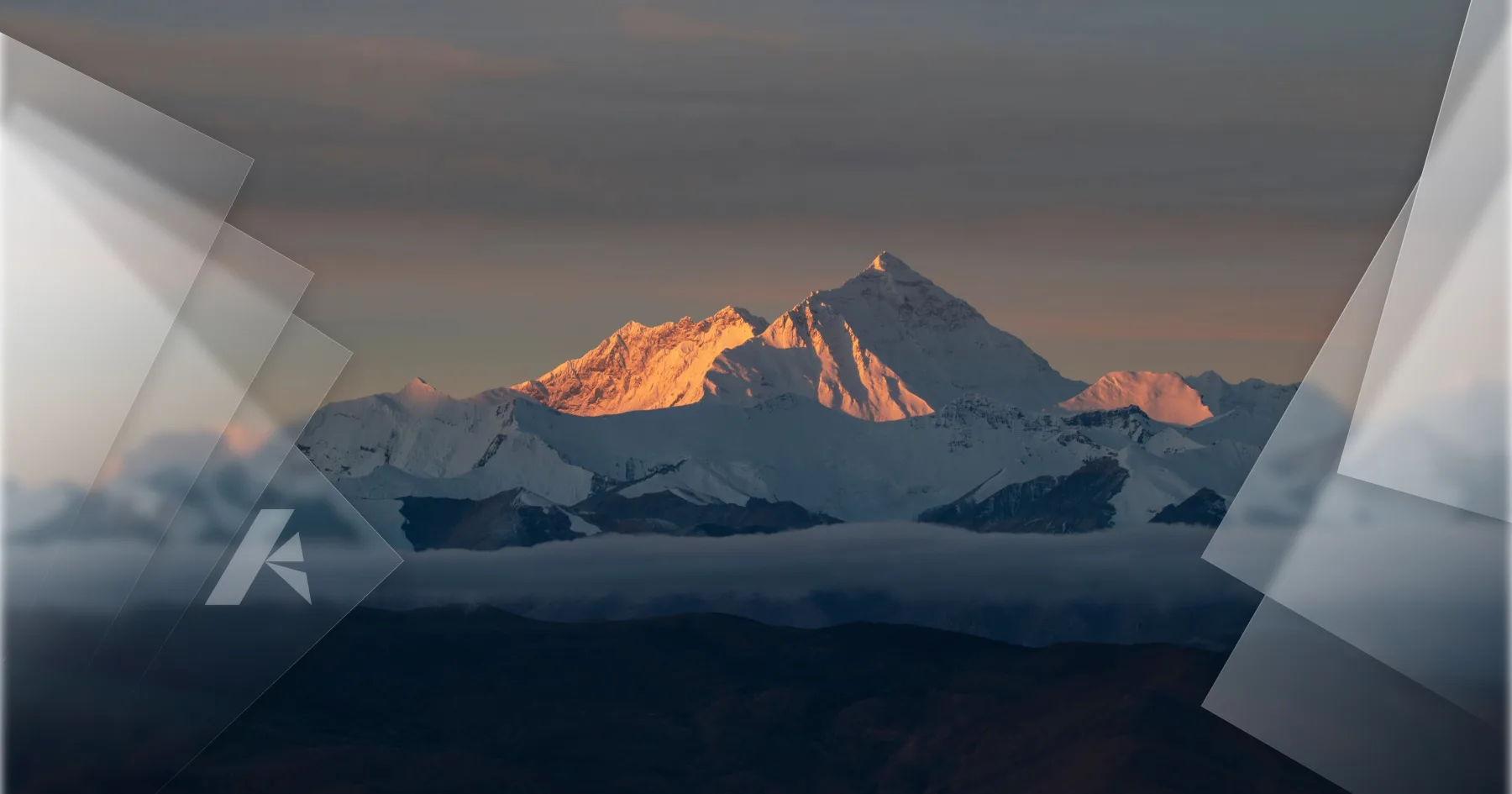
Standing tall on the border between Nepal and Tibet (China), Mount Everest is the undisputed king of mountains. Known locally as Sagarmatha in Nepal and Chomolungma in Tibet (meaning “Goddess Mother of the World”), Everest has captured the global imagination like no other peak.
Sir Edmund Hillary of New Zealand and Nepali Sherpa Tenzing Norgay were the first to officially summit the mountain on May 29, 1953. Today, Everest sees hundreds of climbers every spring climbing season. Despite being the highest mountain, it is actually considered one of the less technically demanding 8,000-meter peaks to climb—though extreme altitude, volatile weather, and immense physical toll still make it incredibly dangerous. In late 2020, Nepal and China jointly announced a newly measured height of 8,848.86 meters, confirming the peak is still slowly growing.
2. K2 (8,611 m)
The Savage Mountain
Located on the China-Pakistan border in the rugged Karakoram Range, K2 is widely regarded by climbers as the toughest and most dangerous mountain in the world. It earned its intimidating nickname, “The Savage Mountain,” because of its blistering weather, steep rock faces, and devastating fatality rate. For every four people who reach the summit, one dies trying.
Unlike Everest, which has a relatively clear and sloped climbing route, K2 is a steep pyramid from almost every side. It requires intense technical rock and ice climbing skills at extreme altitudes. It was only recently, in January 2021, that K2 was finally summited in the winter—a historic feat accomplished by a team of incredibly skilled Nepali mountaineers.
3. Kangchenjunga (8,586 m)
The Five Treasures of Snow
Straddling the border between eastern Nepal and the Indian state of Sikkim, Kangchenjunga is the third-highest mountain on Earth. Until 1852, it was actually assumed to be the tallest mountain in the world before British surveyors accurately measured Everest.
The name translates from Tibetan to “The Five Treasures of Snow,” referring to its five distinct peaks. The mountain holds deep spiritual significance for the people of Sikkim and the Darjeeling region. Out of respect for local religious beliefs, the first climbers to summit in 1955 (a British team led by Joe Brown and George Band) stopped just a few feet short of the actual peak—a tradition that many mountaineers still honor to this day.
4. Lhotse (8,516 m)
Everest’s Formidable Neighbor
If you look at photos of Mount Everest, you are often looking at Lhotse too. The two mountains are directly connected by a sharp ridge known as the South Col. In Tibetan, Lhotse translates to “South Peak.”
Because of its proximity to Everest, Lhotse is often climbed in tandem with the world’s highest peak. Climbers share the exact same route up through the treacherous Khumbu Icefall before branching off toward Lhotse’s summit. However, the mountain is famous in the alpinist world for its dramatic South Face—a vertical wall of rock and ice that rises 3.2 kilometers in a remarkably short horizontal distance, making it one of the steepest and most technically difficult faces to climb in the world.
5. Makalu (8,485 m)
The Great Pyramid
Just 19 kilometers southeast of Mount Everest lies Makalu, a stunning, isolated mountain easily recognized by its perfect four-sided pyramid shape.
Makalu is notorious for its steep pitches and knife-edged ridges, making it a highly technical climb. It is also completely exposed to the elements, meaning it gets battered by high-altitude winds. The mountain was first conquered by a French expedition in 1955. The team managed a monumental achievement at the time by successfully putting all ten expedition members on the summit over the course of three days.
6. Cho Oyu (8,188 m)
The Turquoise Goddess
Situated about 20 kilometers west of Everest on the Nepal-Tibet border, Cho Oyu translates to “Turquoise Goddess” in Tibetan.
If K2 is the most dangerous eight-thousander, Cho Oyu is generally considered the most accessible. Thanks to a relatively moderate, straightforward western face and easy access from the Nangpa La pass (an ancient trading route between Tibet and the Khumbu valley), it is often the first 8,000-meter peak attempted by aspiring high-altitude mountaineers. Despite the “easier” label, surviving at 8,188 meters still requires immense physiological adaptation and oxygen support.
7. Dhaulagiri I (8,167 m)
The Dazzling White Mountain
Located entirely within Nepal, Dhaulagiri derives its name from Sanskrit, meaning “Dazzling White Mountain.” When you look at its massive, snow-covered mass rising dramatically above the Kali Gandaki River gorge, the name makes perfect sense.
Dhaulagiri held the title of the world’s highest known mountain for about 30 years in the early 19th century before Kangchenjunga displaced it. It is considered an aesthetic masterpiece by mountain lovers and remains a tough, remote, and highly respected climb. The mountain was first summited in 1960 by a Swiss-Austrian expedition that notably included the first use of an airplane to establish base camps at such extreme altitudes.
8. Manaslu (8,163 m)
Mountain of the Spirit
Manaslu, located in the west-central part of Nepal, comes from the Sanskrit word manasa, meaning “intellect” or “soul”—hence its nickname, the “Mountain of the Spirit.”
It features long ridges and valley glaciers that offer very distinct approaches from all directions. Manaslu is considered the Japanese mountain; just as the British fiercely pursued Everest, the Japanese set their sights on Manaslu. Toshio Imanishi and Gyalzen Norbu, part of a Japanese expedition, were the first to reach the summit in 1956. Today, it has become a highly popular commercial climb, second only to Everest and Cho Oyu in the number of annual summits.
9. Nanga Parbat (8,126 m)
The Killer Mountain
The westernmost anchor of the Himalayas, situated in the Gilgit-Baltistan region of Pakistan, Nanga Parbat translates to “Naked Mountain” due to its steep rock faces that are too vertical to hold snow.
However, it is far more commonly known by a much darker moniker: “The Killer Mountain.” During the mid-20th century, before its first successful ascent by Austrian climber Hermann Buhl in 1953, Nanga Parbat claimed the lives of 31 climbers and support staff. It features the Rupal Face, which rises an astonishing 4,600 meters (15,000 feet) straight up from the valley floor, making it the highest mountain face on the planet.
10. Annapurna I (8,091 m)
The Goddess of the Harvest
Rounding out the top ten is Annapurna I, located in north-central Nepal. Do not let its 10th-place ranking fool you—Annapurna is statistically one of the most lethal mountains on Earth. The peak is heavily prone to massive, unpredictable avalanches, making any attempt to summit a game of high-altitude Russian roulette.
Despite its danger, Annapurna holds a special place in mountaineering history. In 1950, a French expedition led by Maurice Herzog and Louis Lachenal successfully reached the summit. This was a groundbreaking achievement: Annapurna I was the very first 8,000-meter peak ever summited by humans, proving that surviving at such extreme altitudes was scientifically possible.
The top 10 highest mountains in the world are more than just geological anomalies of rock and ice; they are monuments to the raw power of our planet. They continue to humble us, inspire us, and remind us of the fragile balance between human ambition and the absolute forces of nature.