Sinigang: The Story of the World’s Best Soup
Imagine a heavy downpour rattling against your window. The air is cool, the day feels a bit sluggish, and you need something to wake up your senses. In many parts of the world, people reach for a heavy, creamy chowder or a subtle chicken noodle soup. But in the Philippines, there is only one undeniable answer to a gloomy day: a steaming, fiercely sour, and deeply savory bowl of Sinigang.
For generations, Sinigang has been the undisputed king of Filipino comfort food. It’s the dish that welcomes you home, the soup that cures a cold, and the centerpiece of a Sunday family lunch.
But this humble, tart broth isn’t just a local secret anymore. In 2021, the global food database TasteAtlas shook the culinary world by naming Sinigang the “World’s Best Soup,” beating out international heavyweights like Japan’s Tonkotsu Ramen, Vietnam’s Pho, and Italy’s Minestrone.
How did a sour soup from the tropics claim the global crown? The answer lies in its brilliant, unapologetic flavor profile and its deeply rooted history.
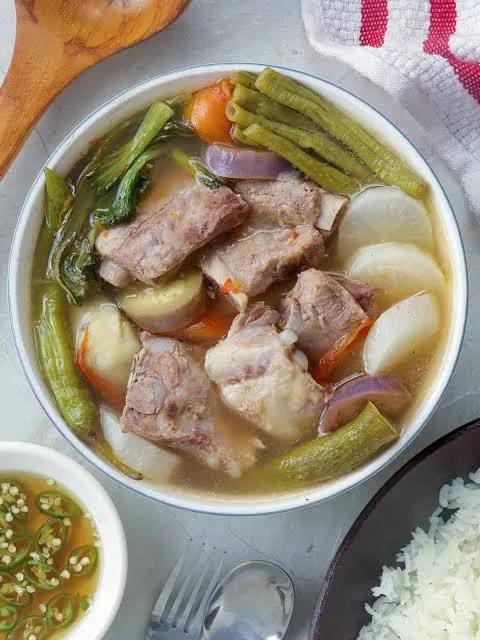
Source: Kawaling Pinoy
The Anatomy of a Perfect Bowl
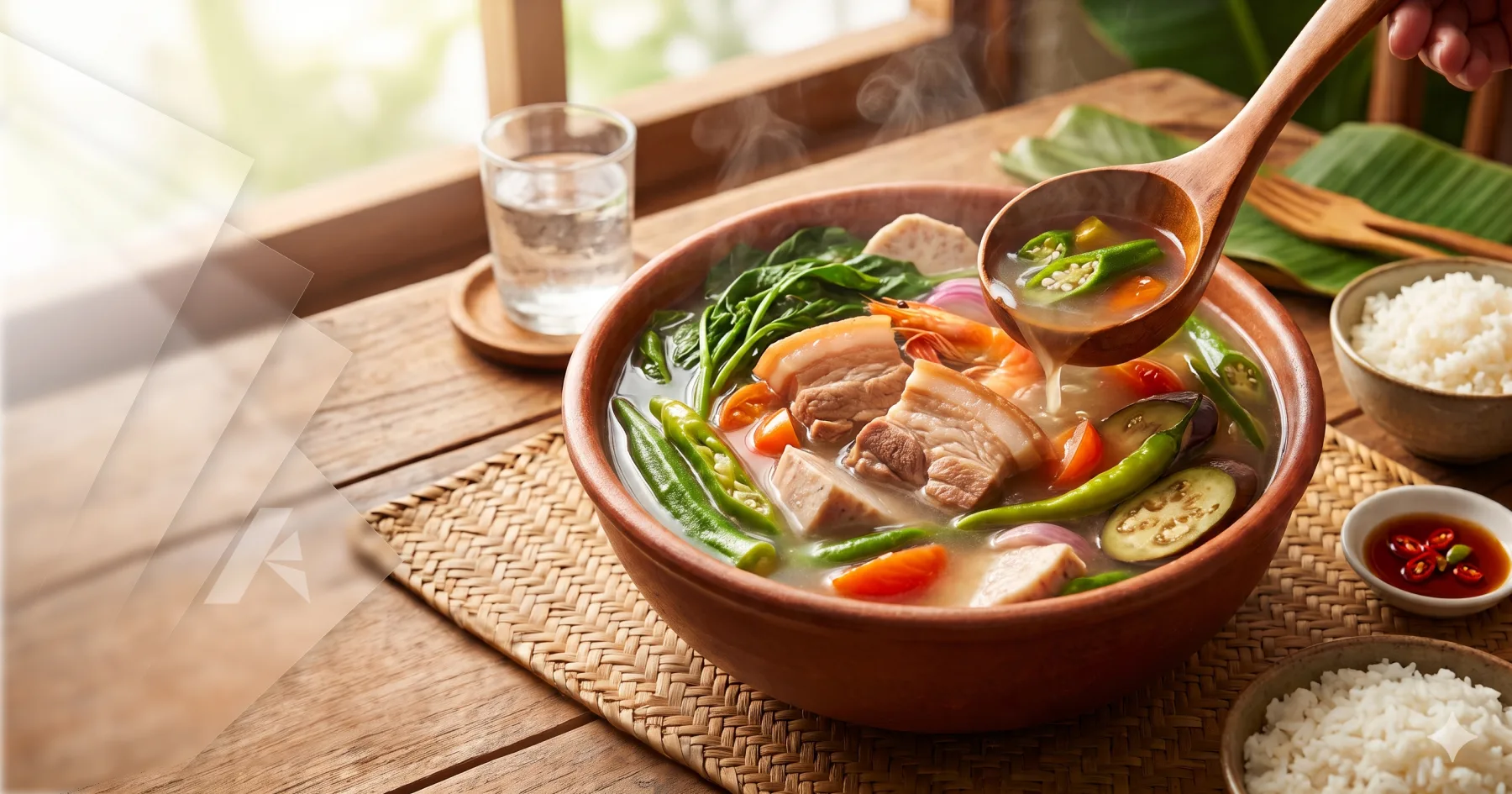
If you’ve never had Sinigang, describing it as just a “sour soup” does it a massive disservice. The magic of Sinigang is how it balances high-voltage acidity with rich, fatty umami.
The broth hits your palate immediately with a puckering tang—usually coaxed from unripe tamarind (sampaloc). But just as your lips start to pucker, the richness of the meat (often pork belly or ribs) washes over your tongue, mellowing the sourness into a savory, mouth-watering finish.
A traditional bowl is a textural playground:
- The Meat or Seafood: Tender, fall-off-the-bone pork ribs, plump shrimp, or rich milkfish belly.
- The Crunch: Slices of daikon radish (labanos) and crisp string beans (sitaw) that hold their snap even in the hot broth.
- The Greens: Water spinach (kangkong) that acts like a sponge, soaking up the sour broth.
- The Heat: Whole green finger chilies (siling panigang) bobbing at the surface, releasing just enough background warmth without setting your mouth on fire.
You don’t eat Sinigang on its own. You ladle it generously over a mound of steaming white rice, mashing a piece of tender taro root (gabi) into the broth to make it slightly thick and starchy.
An Indigenous Masterpiece: The Origins of Sinigang
Unlike many famous Filipino dishes (like Adobo or Caldereta) that carry heavy Spanish or Chinese influences, Sinigang is unapologetically indigenous. Long before colonizers arrived on the archipelago, early Filipinos were already boiling their proteins in sour broths.
Why sour? In a hot, humid tropical climate, acidity serves two brilliant purposes. First, souring agents act as natural preservatives, extending the life of meat and seafood in the days before refrigeration. Second, acidity stimulates the appetite and causes a mild cooling effect on the body by promoting light sweating—a culinary trick used in tropical cuisines worldwide.
While tamarind is the most famous base today, true traditional Sinigang adapts to whatever the local land provides. The soup changes its character entirely depending on which region of the Philippines you are in.
The Spectrum of Sour
| Souring Agent | Local Name | Flavor Profile | Best Paired With |
| Tamarind | Sampaloc | Earthy, sharp, and deeply tart. | Pork, Beef, Shrimp |
| Guava | Bayabas | Mild, slightly sweet, and aromatic. | Milkfish (Bangus), Pork |
| Green Mango | Manggang Hilaw | Bright, fruity, and highly acidic. | Fish, Shrimp |
| Bilimbi | Kamias | Sharp, clean, and aggressively sour. | Fish |
| Garcinia | Batwan | Subtle, smooth sourness (popular in Visayas). | Pork |
How It Conquered the World
When TasteAtlas announced Sinigang as the World’s Best Soup, it sparked a global conversation. Food critics and international chefs began dissecting the bowl to understand its victory.
The consensus? Sinigang won because it is dynamic. Most world-famous soups lean heavily into one direction—either deep, heavy richness (like a tonkotsu broth boiled for 24 hours) or light, clear herbal notes (like chicken consommé).
Sinigang does both simultaneously. The tartness cuts right through the fat of the pork belly, meaning you can eat a rich, heavy meat soup without ever feeling weighed down or experiencing palate fatigue. Every spoonful resets your tastebuds, demanding that you take another bite. It is a masterpiece of culinary balance disguised as peasant food.
More Than Just a Soup
To understand Sinigang is to understand Filipino culture. It is a dish that refuses to be pretentious. It doesn’t require precise plating, clarified broths, or tweezers to assemble. It is cooked in a single, massive pot, meant to be ladled out among laughing family members sharing stories over a crowded table.
It was named the World’s Best Soup because of its taste, but it remains a legend because of how it makes you feel. Whether you’re making it from scratch with freshly squeezed tamarind pods or using a handy flavor packet in a dorm room halfway across the world, one thing is certain: that first sour, savory sip always tastes like home.